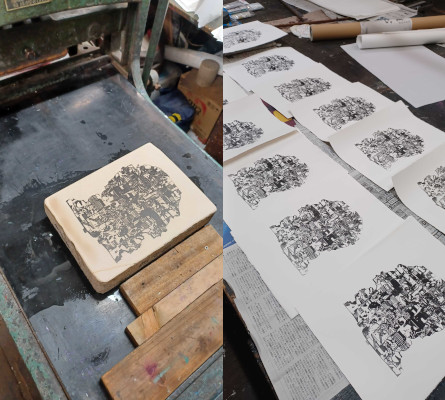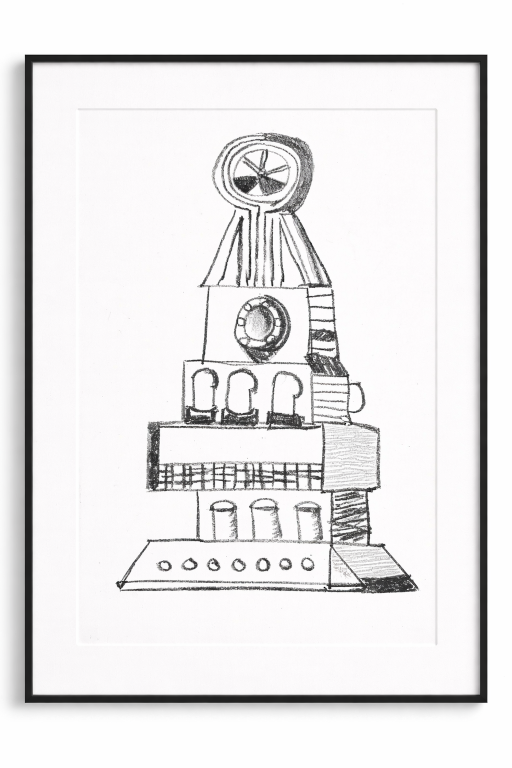
Dream Factory
¥30,000
Sold Out
Signed editioned lithograph
(Edition of 10), 2025
39.5 cm x 27.3 cm
Stone lithography with oil crayon on Arches paper
Printed at Bigakko Art College, Jimbocho, Tokyo
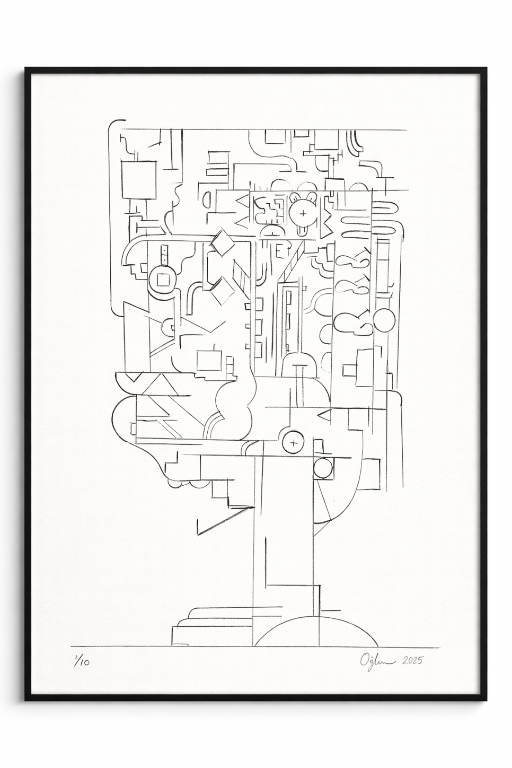
Mechanical Head
¥50,000
Signed lithograph
(Edition of 10), 2025
76.5 cm x 57 cm
Stone lithography with oil crayon on Arches paper
Printed at Bigakko Art College, Jimbocho, Tokyo
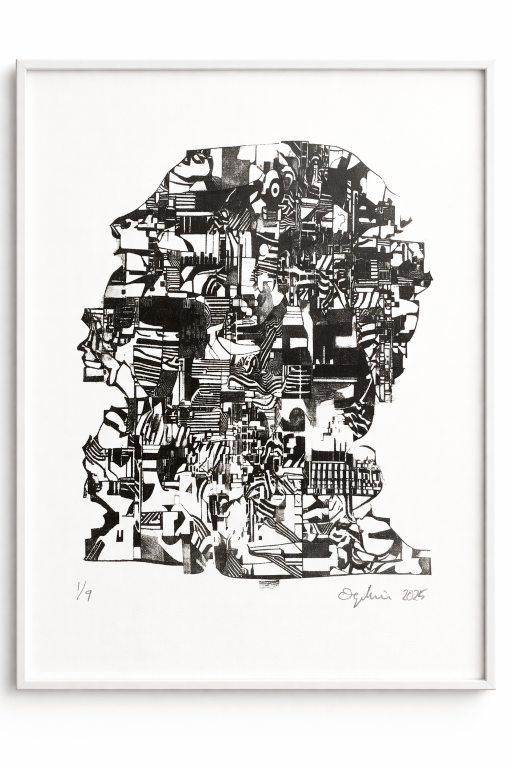
Probe
¥20,000
Signed lithograph
(Edition of 9), 2025
Stone lithograph using laser-toner transfer process on Arches paper
Printed at Bigakko Art College, Jimbocho, Tokyo
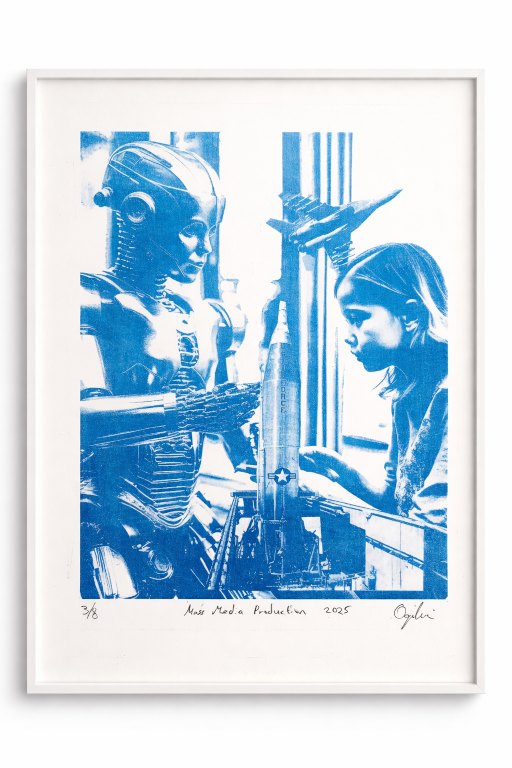
Mass Media Production (Blue)
¥30,000
Signed lithograph
(Edition of 8 in two colourways), 2025
38.4 cm x 28.3 cm
Collage to photosensitized aluminum plate, hand printed on Arches paper
Printed at Bigakko Art College, Jimbocho, Tokyo
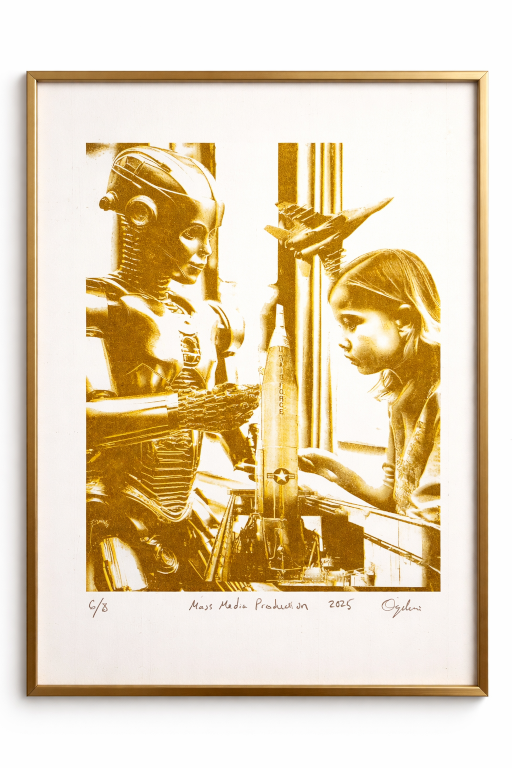
Mass Media Production (Two Tone)
¥40,000
Signed lithograph
(Edition of 8 in two colourways), 2025
38.4 cm x 28.3 cm
Collage to photosensitized aluminum plate, hand printed on Arches paper
Printed at Bigakko Art College, Jimbocho, Tokyo
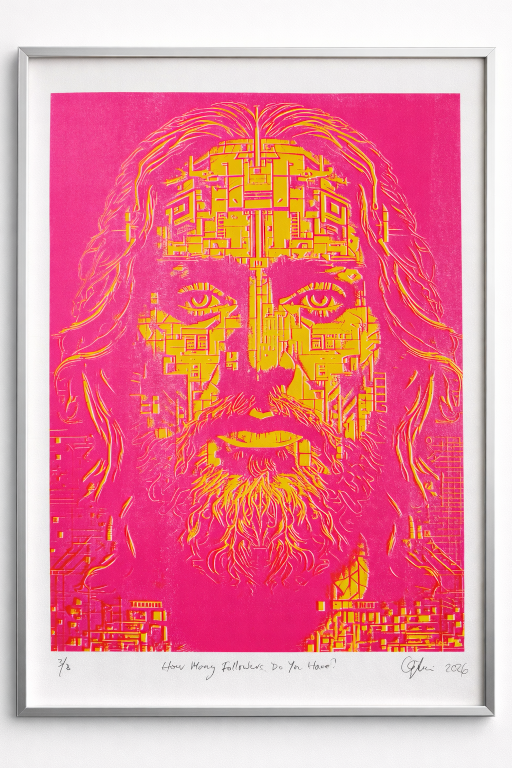
How Many Followers Do You Have? (Pink Background)
¥70,000
Signed lithograph
(Edition of 8, in two colourways), 2026
57 cm x 38.4 cm
Hand printed from multiple layered photosensitized aluminum plates, lithograph on Arches paper
Printed at Bigakko Art College, Jimbocho, Tokyo
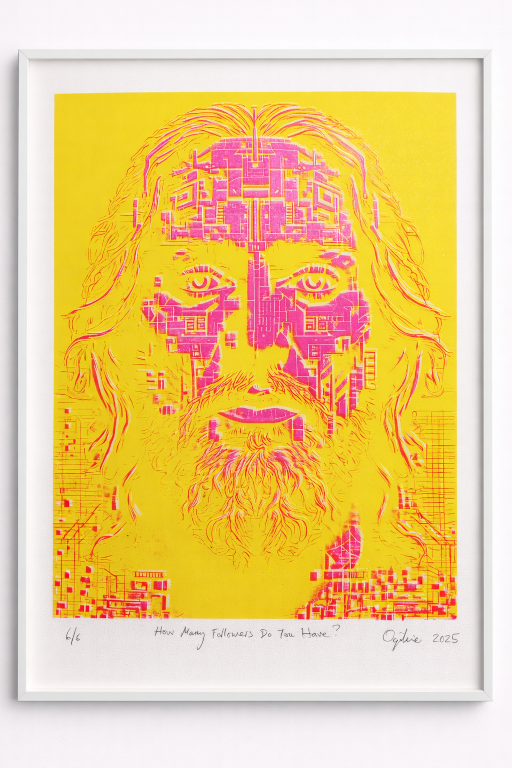
How Many Followers Do You Have? (Yellow Background)
¥70,000
Signed lithograph
(Edition of 8, in two colourways), 2026
57 cm x 38.4 cm
Hand printed from multiple layered photosensitized aluminum plates, lithograph on Arches paper
Printed at Bigakko Art College, Jimbocho, Tokyo